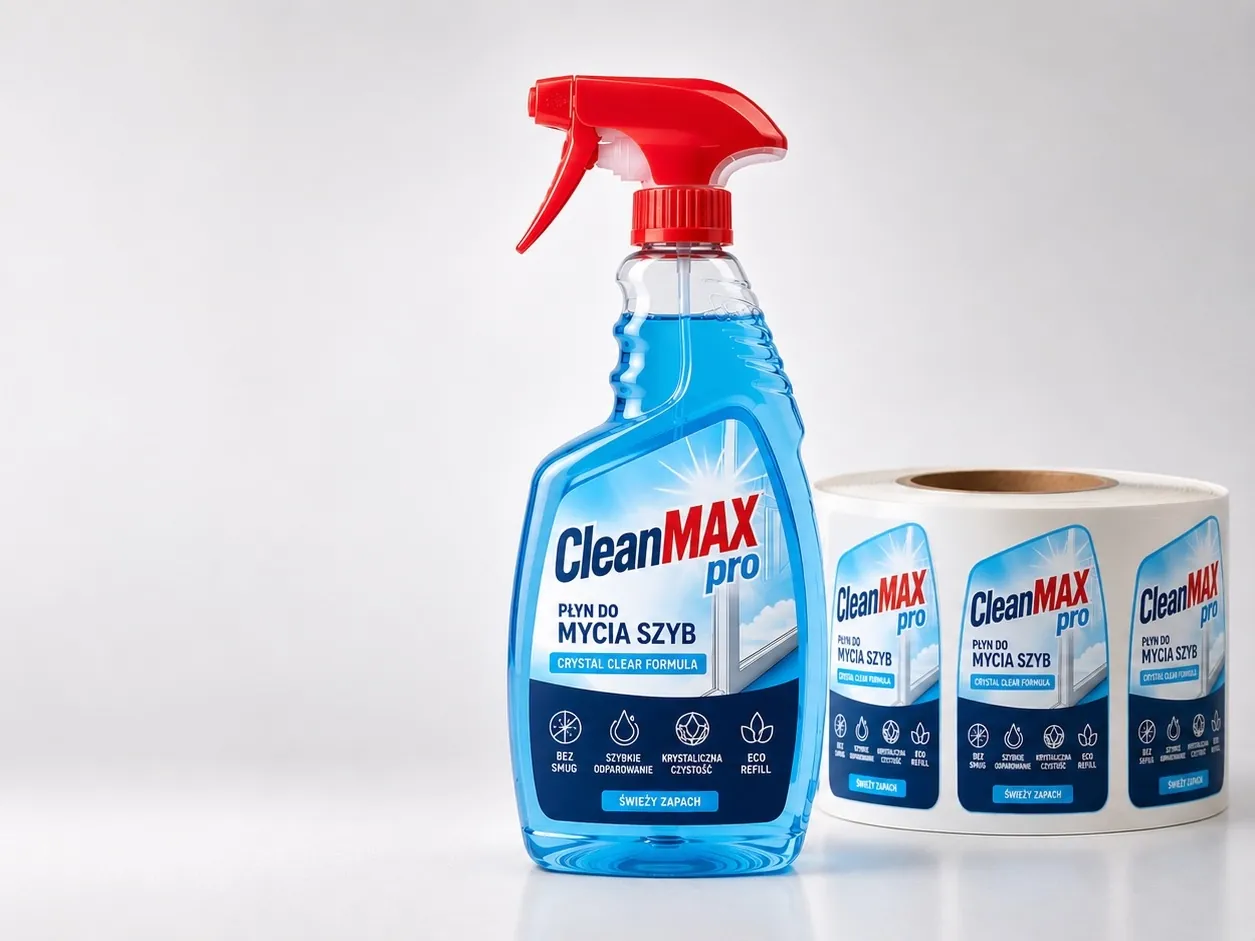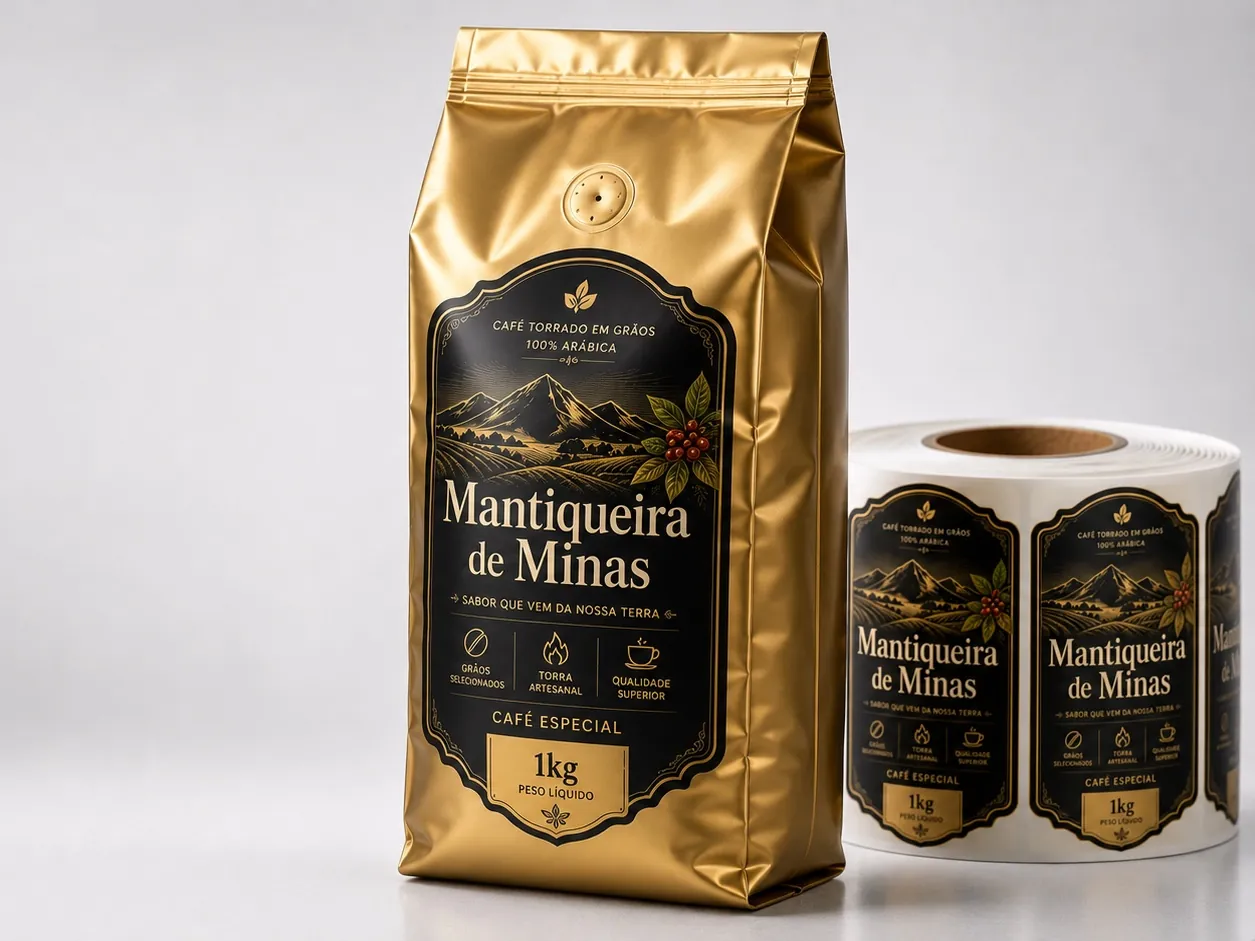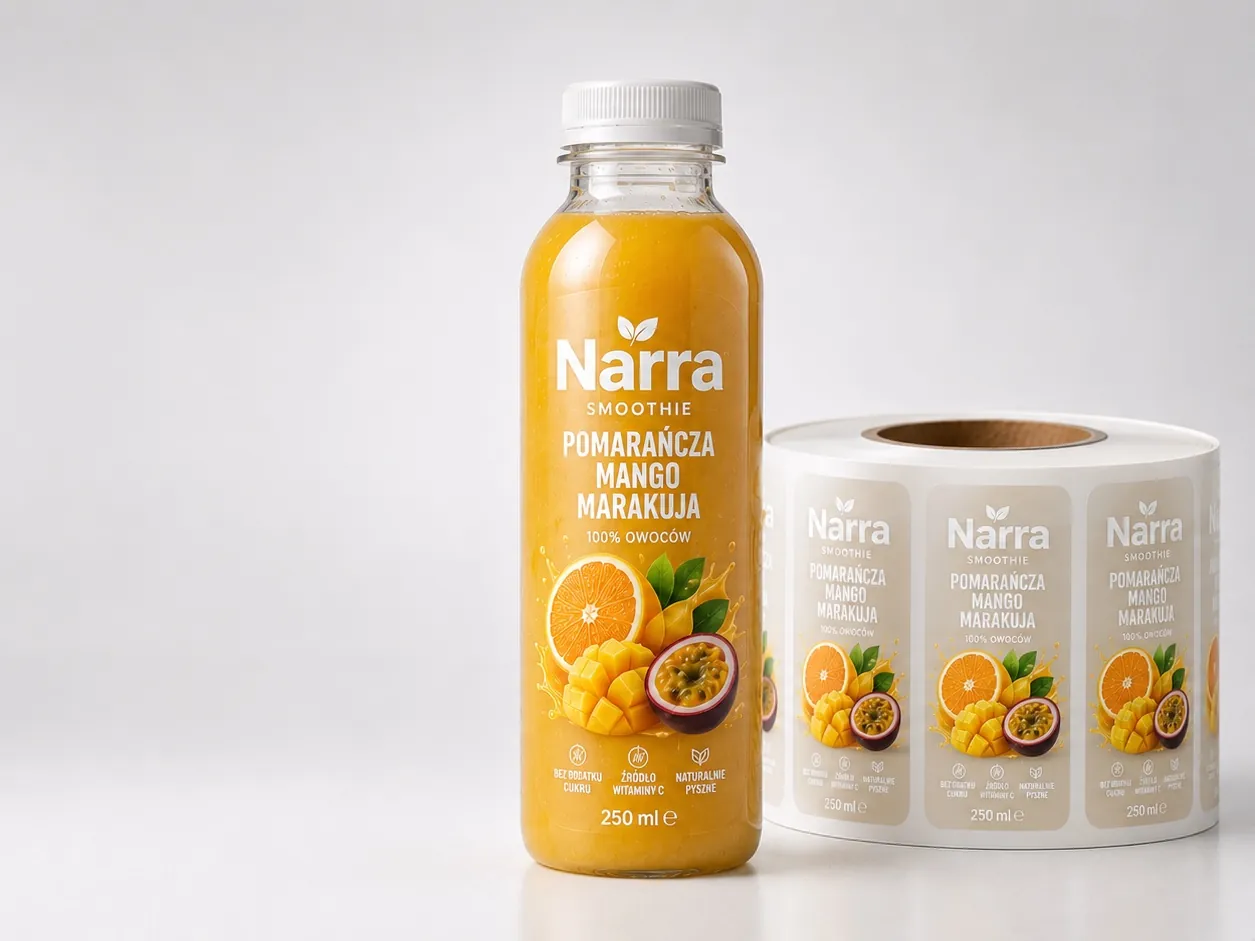
Film labels
Engine oil is the test for a label: a greasy HDPE bottle, plasticisers and a damp warehouse. Film passes it every day.
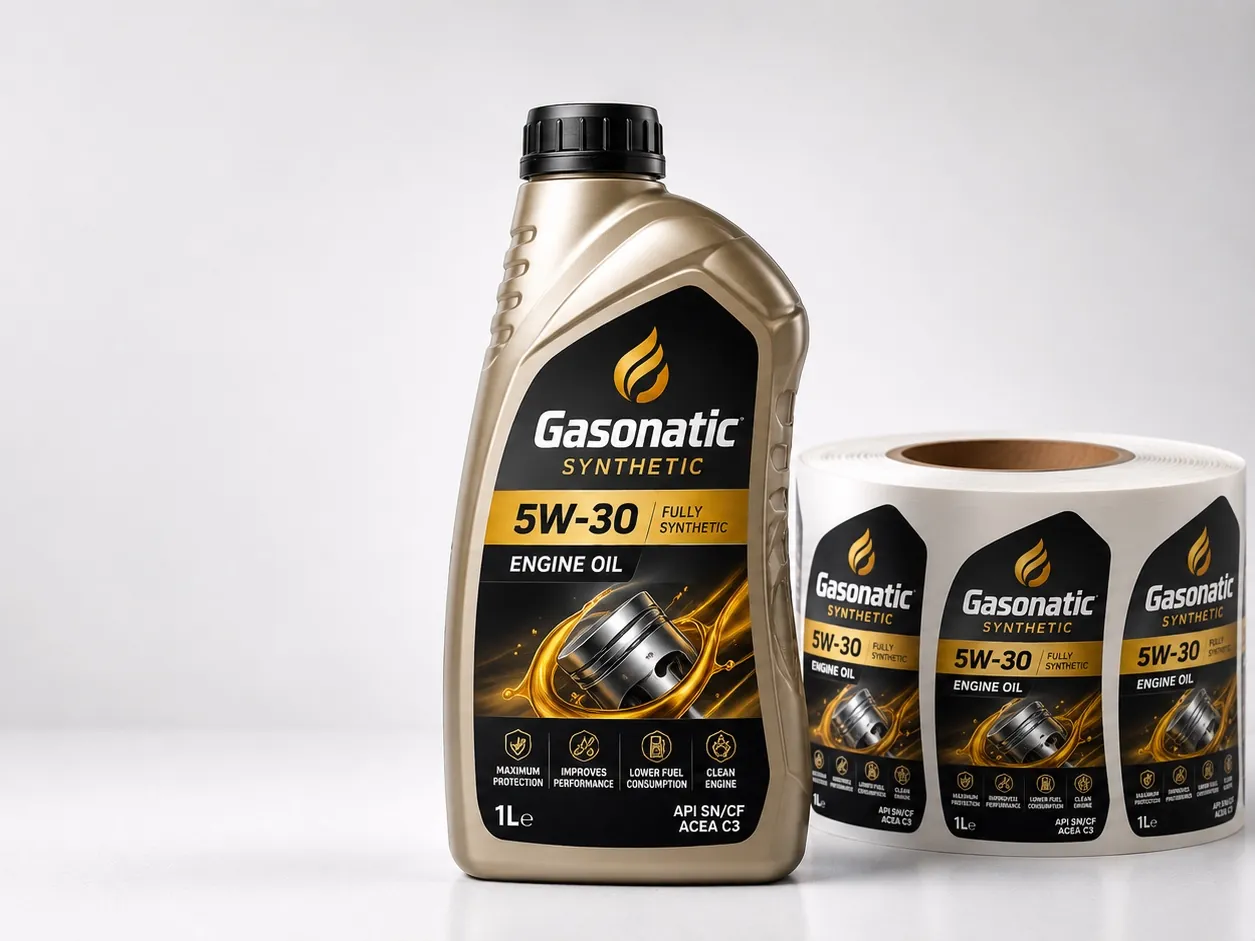
A polyethylene bottle is one of the harder surfaces in labelling: low surface energy, plus oily residue from the filling line and plasticisers that slowly “dissolve” ordinary adhesive. That is why we match the film and adhesive to the specific pack — from engine oils and chemicals to shampoos and washing-up liquids.
Rigid PP films give clarity and chemical resistance; flexible PE films conform to squeezable bottles and tubes. For hot filling we use adhesives that expand with the container — without wrinkles. And for chemicals shipped by sea we select BS 5609-certified constructions, tested for immersion in salt water.
Good to know
A simple test of whether you need film: will the label meet water, grease or a wet hand even once in the product’s life? If so — paper will show it sooner or later. Remember touch, too: customers subconsciously link the smoothness of film with the quality of the product itself.
What you can choose from
PP film — rigid
Clear, dimensionally stable, chemically resistant. Best for bottles with straight shapes and packaging that must withstand detergents and grease.
PE film — flexible
Soft and stretchable: conforms to squeezable bottles, tubes and irregular shapes without wrinkling or lifting.
Pearl white and metallised
When the film should not only protect but also decorate — a pearl or metallic effect without additional finishing.
Recycled rPP / rPE
Films with recycled content — from 30% up to 89% post-consumer waste (ISCC+ certified). Look and performance like virgin films.
The adhesive does half the work
For apolar surfaces
HDPE and PP have low surface energy — ordinary adhesive lifts off them. We use formulations designed for plastics, including freshly moulded bottles with release agent residue.
Resistant to oils and plasticisers
Engine oils and chemicals “dissolve” standard adhesives. Modified acrylics hold despite a greasy surface and migrating components.
For hot filling
The adhesive expands with the container during hot filling — a label without wrinkles and bubbles.
Wash-off for recycling
Constructions that separate cleanly from PET and HDPE in industrial washing — the pack returns to circulation as a full-value raw material (APR / RecyClass approvals).
You do not need to know these terms — just tell us what the label has to stick to and the conditions it will live in. Our technologist will choose the rest.
You may also be interested in