Textured papers
The customer touches the label first and reads the vintage second. The texture of the paper makes the first move.
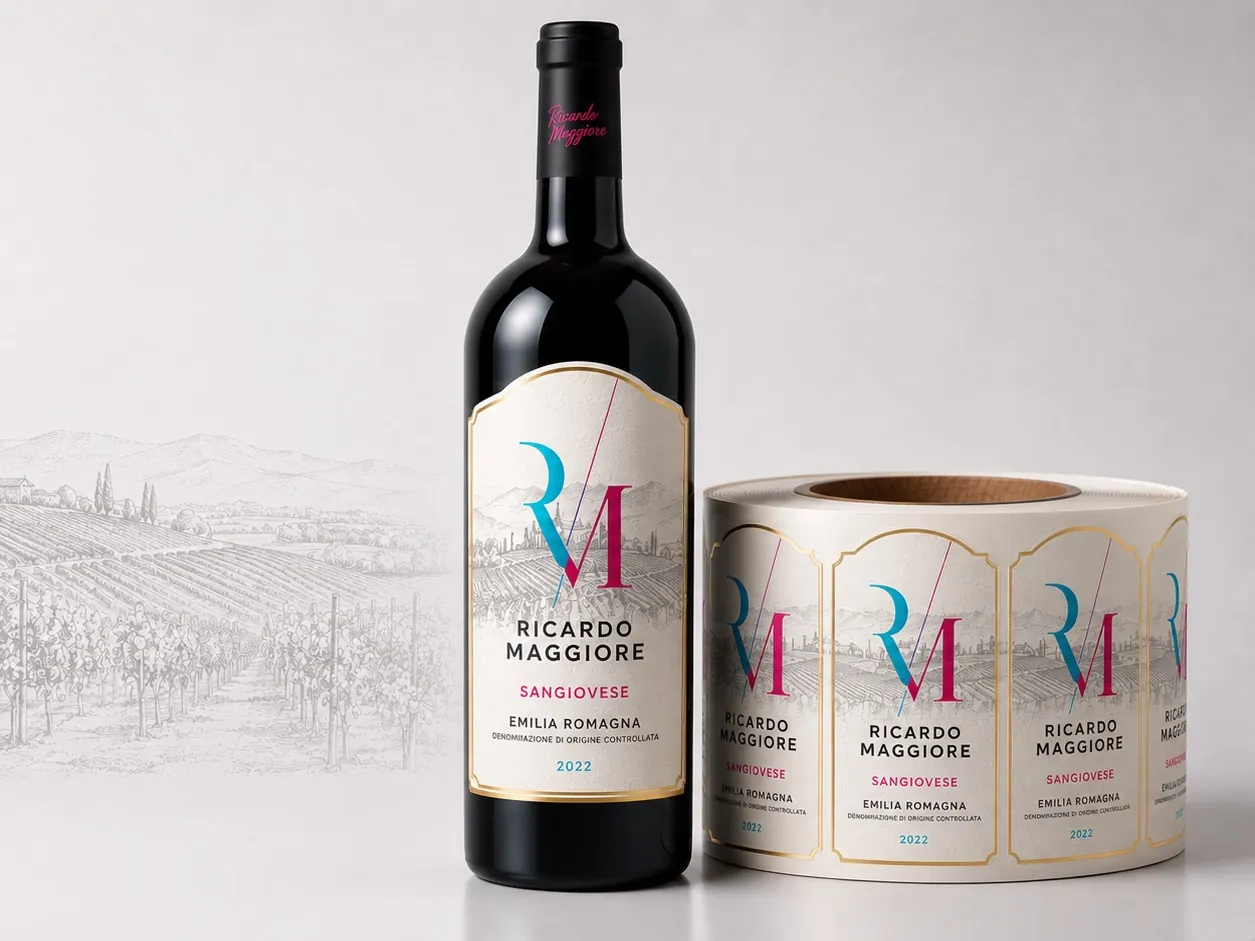
A bottle of wine sells in the hand: cream paper with a tangible linen or laid texture signals quality faster than any word. We work with wine-grade papers from Avery Dennison and Fedrigoni (Manter) — from classic textures to dyed-through papers and 100% cotton.
For chilled wines we select wet-strength constructions with a barrier on the reverse — the best withstand 24 hours in an ice bucket without wrinkles, bubbles or loss of whiteness. The growing eco shelf is covered too: papers from grape waste, cocoa husks or grass combine a premium texture with a story the winemaker can tell on the label.
Good to know
Texture also has a purely practical advantage few people think of: on linen or laid, micro-scuffs from transport are almost invisible, so bottles reach the shelf “fresh”. And if your brand talks about nature — ask about papers with a story: from grape waste, cocoa husks or grass.
What you can choose from
Classic wine textures
Linen, laid, hammer, ribbed — textures you feel under your fingers, communicating quality before the customer reads a word. Families such as Tintoretto or Constellation.
Cotton papers
Up to 100% cotton in the pulp — the softness and matt depth the best wineries and distilleries reach for.
Eco-premium
Papers from grape waste, cocoa husks, grass or straw — a premium texture plus a sustainability story you can tell on the back label.
Wet-strength / WATERPROOF
Constructions with a barrier on the reverse for chilled wines: the best withstand 24 hours in an ice bucket without wrinkles, bubbles or loss of whiteness.
The adhesive does half the work
Repositionable wine adhesive
Lets you correct the label position during application; once pressed down it bonds permanently — a lifesaver for hand labelling.
Resistant to water and ice
For bottles that end up in the ice bucket — the adhesive does not let go, the paper does not lift.
Wash-off for returnable bottles
Holds all evening in ice, then comes off cleanly in alkaline washing — the bottle returns to the filling line without a trace.
You do not need to know these terms — just tell us what the label has to stick to and the conditions it will live in. Our technologist will choose the rest.
You may also be interested in